Fishin Frenzy, taken apart: the round, the fisherman, the maths
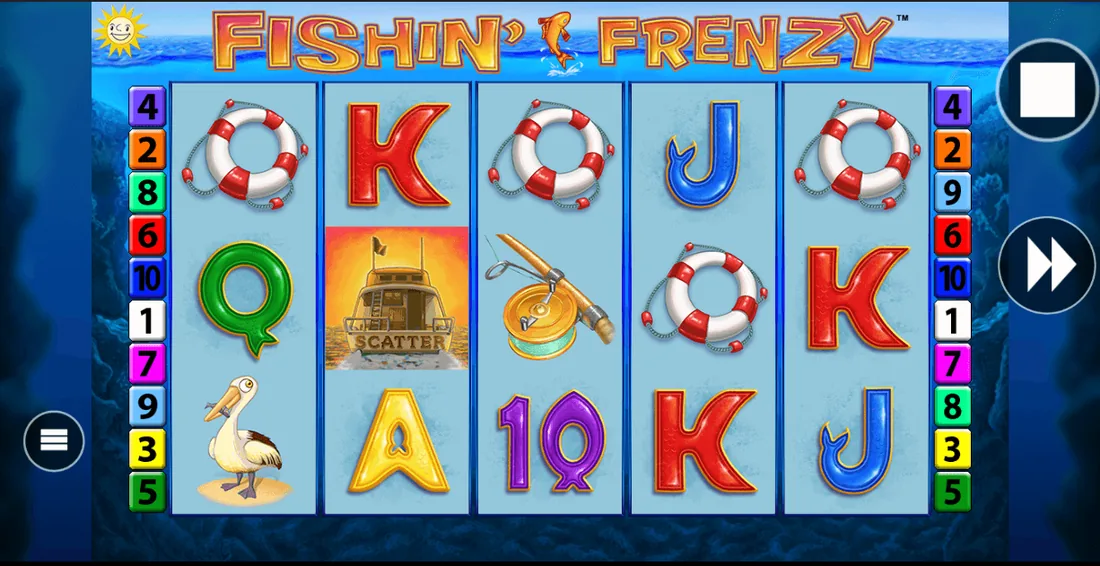
£2.00 is the most a British player aged 18 to 24 can put on a single spin; for everyone else the ceiling is £5.00. Hold that figure in your head, because everything else about Fishin Frenzy — the ten fixed lines, the fisherman who sweeps up fish, the free spins where nearly all the excitement lives — happens inside a box that British rules have already measured and shrunk. Nadia, 34, plays on the top deck of the bus into Bristol. She set a £10.00 limit, spun at 20p, and spent three weeks watching the balance wobble without ever quite leaving. That is an ordinary month on a medium-volatility slot, and it is the honest place to start.
What follows is a breakdown rather than a pitch: what happens between pressing spin and the balance changing, where the design actually stores its money, what the return figure means and does not mean, and where the game behaves well or badly on a phone. No win is promised here, and no strategy is offered, because neither exists. The useful thing you can take away is a clear picture of what you are buying.
One spin, start to finish
A spin is a single transaction. Your stake leaves the balance, a random number generator picks a result, the five reels land, and the ten paylines are read from the left. Anything that matches pays into the balance in the same second. There is no moment where a win sits in limbo waiting to be claimed, which makes the idea of «collecting» slightly fictional on this game. The only real decision is whether the next spin happens.
The grid is five reels by three rows, and the ten lines stay on all the time: you cannot buy extras or switch them off. Wins need matching symbols starting from the leftmost reel, and the paytable in the menu lists every value, including what the top symbol pays for three, four and five.
- Open the paytable before the first spin and read the symbol values and the scatter rule, not just the pretty screen.
- Set the stake with the plus and minus buttons. It starts small and steps up, and it stops at the legal cap.
- Spin once, manually, and watch where the wins come from rather than what they add up to.
- Note the scatter. Three or more open the free spins, and that is where the design has put most of its money.
- Decide your stopping point before you begin — a number of spins or a balance, whichever arrives first.
The fisherman is the whole argument
The base game is deliberately plain: small symbol wins, long gaps, and a scatter that sometimes refuses to turn up. Then three scatters land and the shape changes. Fish symbols appear carrying cash values, and the fisherman, when he arrives, collects every fish on the screen at once. In the original that is the entire trick, and it is why the game has lasted — the payout is visual, instant, and understandable without reading a rule.
- Base game: no multiplier at all. Wins are paytable values, full stop.
- Free spins: fish carry cash values instead of paying on lines.
- The fisherman collects all visible fish in one go, so a screen full of fish is worth far more than a single one.
- Some sister releases add a ladder — Fishin Frenzy The Big Catch steps a multiplier to x2, x3 and then x10 — but those are separate games with their own paytables, not a setting inside this one.
- Which version is in front of you matters: the info screen names it and shows its own return figure.
Against the ways-and-cluster slots that now fill the shelves, this is a small, tidy game: ten lines, no expanding reels, no cascading wins, and a bonus that resolves in one animation rather than a mini-game. The bonus-buy button you may have seen on sites abroad does not appear in the UK-licensed build.
What the 96 per cent does and does not promise
The published return to player sits just over 96 per cent. Read literally, that means the game is built to give back about £96.00 of every £100.00 staked across an enormous number of spins and keep the rest. It is an average over an infinite sample, and it says nothing about your hour, your £20.00, or the twenty spins after this one. Check the figure on screen rather than trusting a description of it: variants get different numbers, and the panel in front of you is the one that applies.
Volatility is generally described as medium. In practice that means a base game that feels tighter than the headline number, because a large share of the return is parked in the free spins. Long losing stretches are the design working as intended, not evidence that a payout is overdue.
Where the money goes in, and how slowly it comes back
Stakes start around 10p on the builds most British sites carry and stop at the legal ceiling: £5.00 a spin, or £2.00 for players aged 18 to 24. Those caps are not the game's choice. Any operator holding a UKGC remote licence has to apply them, and the age-banded cap is checked against the date of birth on your account.
Deposit limits are mandatory rather than a courtesy, and affordability checks begin once net deposits reach £150.00 a month, with credit-reference data used at the first stage. Credit cards have been barred for gambling since 2020, so fund the account with a debit card, PayPal, Apple Pay, Open Banking or paysafecard, and always in your own name.
Getting money out is the part that catches people. Age and identity checks happen before you can deposit, but documents are usually requested before the first withdrawal, and 24 to 48 hours for that review is normal. After that: e-wallets take a few hours to 24 hours, Faster Payments to a bank lands the same day or within two working days, and debit cards take one to three. The first one is always the slowest because of the paperwork. Winnings are tax-free for you; the operator pays Remote Gaming Duty, which rose to 40 per cent in April.
No autoplay, and why the buttons are so few
If you played this game on an unlicensed site or an old demo, you may remember an autoplay panel: twenty spins, fifty, stop-on-loss triggers. It is not there on UK-licensed versions. Autoplay was removed from British online slots, alongside losses disguised as wins and reverse withdrawal, and the spin button now enforces a minimum gap between spins. What is left is manual play: press, watch, decide. Slower, and deliberately so.
The trade is that you keep every decision. Pick a stake you would not mind losing twenty times over, because twenty losing spins in a row is an ordinary event on a medium-volatility game rather than a fault. Use the deposit limit and session timer the operator is obliged to offer. If it stops being a bit of fun, GAMSTOP blocks every UKGC-licensed site from one registration, for anything between six months and five years, and BeGambleAware handles the conversations in between. This is an 18+ product, and the sites carrying it legally will say so in the footer.
On a phone, and where to open it
The game was drawn for landscape desktop and has been folded into portrait for phones. It survives the trip better than most: five reels across a six-inch screen leaves small symbols, but the paytable scales, the spin button sits within thumb reach, and the fisherman animation is short enough not to stall on a weak connection. It runs in the browser, so there is nothing to install and the file size is modest enough for mobile data. Real-money gambling apps from licensed operators are allowed in both the App Store and Google Play, though a slot of this age usually runs as a web app inside the operator's own page.
Demo play is common but not universal: several UKGC sites only show free play to logged-in, age-verified accounts, which is why the demo button sometimes asks you to sign in first. For real money the check is identical everywhere. Look the operator up in the UKGC public register, then match the licence number in the footer of the page you are on. A site without that pairing is not a place to enter card details, however familiar the game looks.
FAQ
Is Fishin Frenzy the original, or a copy of something?
Blueprint Gaming released it, and the loading screen names the provider, which is the quickest way to tell it apart from the many fishing-themed lookalikes that followed. The original is the one with ten fixed lines and the fisherman collecting fish without any multiplier ladder. If a game shows a stepping multiplier or a ways-based grid, you are looking at a different release.
Can I play it for free in Britain?
Often, but not always. Demo play is common across UKGC-licensed sites, and a fair number only show free play to logged-in, age-verified accounts, so the button may ask you to sign in first. The demo runs the same game logic and the same return figure, and it pays nothing. It is the cheapest way to learn a paytable before staking anything.
Why did a free spins round pay so little?
Because the fish values are random and the fisherman has to appear while they are on the screen. A round can easily return less than the spin that triggered it, and it can return nothing at all. That is variance doing its normal work rather than a fault in the game, and it is why the return figure is quoted over millions of spins and not over yours.
How long until a withdrawal lands?
Documents come first, and 24 to 48 hours for that review is typical on a first withdrawal; later ones are usually quicker. Then e-wallets take a few hours to 24 hours, Faster Payments to a bank the same day up to two working days, and debit cards one to three. Winnings are tax-free for you, and the operator pays duty on its own side.